
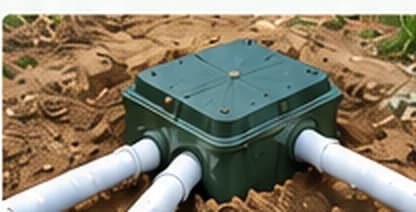
Distribution & Piping
Problems in the distribution box, laterals, or connecting pipes may be limited—or may signal broader field or tank issues that still need evaluation.
Learn MoreNot every septic problem requires complete system replacement.
A backup, an odor, or a wet spot in the yard can come from one damaged component. It can also mean more than one part of the system has failed. The failed part has to be identified before anyone can tell whether a repair will hold.
Backups, odors, slow drains, or wet ground can feel like proof that the whole system is finished. Those symptoms can also come from a limited component problem—or from something that needs replacement of one area rather than everything.
Repair means looking at the failed component first. A full rebuild is one possible result. It is not the opening assumption, and not every failure can be fixed with a small repair.
A tank that needs work is not always the only failed part. The pipes that connect to it, the distribution box, or the absorption field can be the real problem. If the tank has failed but the absorption area remains usable, tank replacement may be possible without rebuilding the field.
Pumping removes wastewater and accumulated solids from the tank. It does not repair a cracked tank, a broken distribution box, or an absorption area that can no longer accept effluent.
A backup, an odor, wet ground, or a slow drain can come from the tank, the distribution components, or the absorption area:
A symptom can point to several parts of the system. Inspection findings should show whether the problem can be repaired or requires replacement of the tank, absorption area, or more of the system.
Different failure points open different options. Compare these areas before assuming the whole system is the only answer.
Problems in the distribution box, laterals, or connecting pipes may be limited—or may signal broader field or tank issues that still need evaluation.
Learn More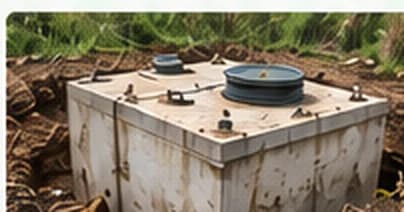
Some tank problems are component-specific. Others point toward tank replacement—or toward a field problem that tank work alone will not solve.
Learn More
A failed absorption area can require substantially more work than a damaged pipe or distribution component. The tank and field should be checked separately.
Learn More
When several major components have failed, or a repair cannot restore reliable operation, complete system replacement may be necessary.
Learn MoreOnce the failed component is identified, determine whether it can be repaired or whether that part of the system must be replaced.
Before choosing a repair, determine:
Compare the condition of the tank with the absorption area, then determine whether the failed component can be repaired or must be replaced.
Some symptoms suggest tank trouble; others point toward the absorption area. They overlap. Separating those questions prevents fixing the wrong part of the system. Compare tank vs. drain-field failure.
If the failed component cannot be repaired, or several major components are failing, replacement may be necessary. Read about septic system replacement.
CWC and the New York State replacement fund are written for qualifying replacement of a failing system. They are a poor fit for every small repair. Eligibility depends on the property and current program rules. Explore septic replacement funding.
No. Some problems are limited to a component or a portion of the system. Others do require larger replacement. The difference depends on what failed, the condition of remaining parts, site conditions, and whether a repair can adequately address the problem.
Distribution components, piping, and certain tank-related issues may be candidates for repair or limited replacement, depending on their condition and the applicable requirements. Absorption-area failure often requires replacement of that area rather than a small patch. The condition of the failed component and the rest of the system determines whether a repair is likely to be adequate.
Symptoms can overlap. Checking the tank, connecting pipes, distribution components, and absorption area helps identify where the failure is occurring. Guessing from one symptom alone is unreliable.
No. Pumping removes accumulated solids and wastewater from the tank. A repair corrects a failed or damaged component. Pumping can relieve an overfull tank for a time. It does not restore a cracked tank or a failed absorption area, and repeating it does not identify the cause.
Major septic repair can require design, approval, and construction that depend on the property. Improper or unapproved work can make the failure larger. The failed component and required work should be established before major excavation begins.
When the failure involves several major parts, when the remaining components cannot support a lasting repair, when the site no longer fits the existing layout, or when evaluation shows that a repair cannot correct the problem.
Start by identifying what failed—before assuming the entire system must be replaced.