
Catskill Watershed septic program
For a Jefferson property in an applicable watershed area, CWC may provide assistance if the property and septic system meet the current program requirements.
Catskill Watershed septic program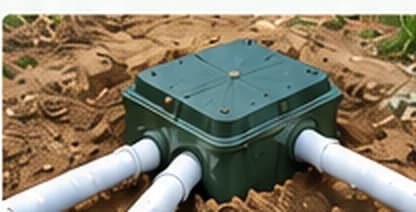
Jefferson is currently identified in CWC septic program materials as a Schoharie County program town.
For a qualifying property, CWC requirements can affect when design and construction work begins because reimbursable work must follow the program’s approval process.
Three different facts get collapsed too easily. The program exists. Jefferson appears with Broome, Conesville, and Gilboa on the current Schoharie County town list for eligible West-of-Hudson watershed portions. A specific house still has to fall in an applicable watershed area and meet the other current requirements, including whatever the published materials say about system age and primary versus non-primary residence. The project itself—the repair or replacement being proposed—also has to fit what the program will consider.
An older system is not eligible merely because published materials discuss system age. Age is one condition to verify with CWC. It is not an eligibility determination.
If the property is outside the applicable watershed area, CWC may not apply. In that case, the New York State Septic System Replacement Fund may apply where priority-waterbody and other criteria are met. Septic replacement funding explains how the two programs differ.
CWC’s published materials discuss both repair and replacement for qualifying properties. That does not mean every failure is a replacement, and it does not mean every repair will be accepted. The inspection findings determine the work: a limited distribution repair, a tank replacement with a usable field, a field replacement with a usable tank, or a complete system.
Bring the inspection report if there is one. A detailed inspection report is more useful than one that simply says the system “failed.” Findings that identify a baffle, distribution box, tank, or absorption-area problem help define the work that may be required.
See septic system repair and septic system replacement after that split is real. Pumping is not either of those projects.
Read the official CWC septic repair and replacement program page, and the Catskill Watershed septic program summary of how those materials apply in Schoharie County. Confirm percentages, documentation, and approval order on the official page.
For a Jefferson property in an applicable watershed area, CWC may provide assistance if the property and septic system meet the current program requirements.
Catskill Watershed septic programHow CWC differs from the state fund.
Septic replacement fundingOfficial program resource
Start With the Official CWC Septic Program Inquiry →Official administering source for CWC septic repair and replacement.
Official program resource
Open Official CWC Forms →Eligibility is determined by CWC, or by the other program’s administrator, under current rules. A town listing is not that decision.
From the failed component and the condition of what remains.
Quotes for design and construction need written approval before the reimbursable work begins. The sequence is on the CWC program page.
Property-specific. Not inferred from the town.
Typically required. Watershed properties may involve additional review.
The septic plan and any program conditions.
Gilboa, Conesville, Broome, and Summit.
Yes. Current CWC materials identify Jefferson as one of the Schoharie County program towns. Property-level watershed location and the other criteria still control eligibility.
No. Published CWC materials discuss system-age concepts. Age alone is not an eligibility determination. Confirm the current requirement with CWC.
The CWC septic repair and replacement program page. The Catskill Watershed septic program and septic replacement funding explain how that program differs from the state fund. CWC decides eligibility.
Yes, when evaluation shows the absorption area is the failure and the tank can remain in service under the applicable requirements.
Identify the failed component, then check CWC’s current rules if the property may be in an applicable watershed area.