
Septic replacement funding
How the New York State replacement fund and the Catskill Watershed program differ.
Septic replacement funding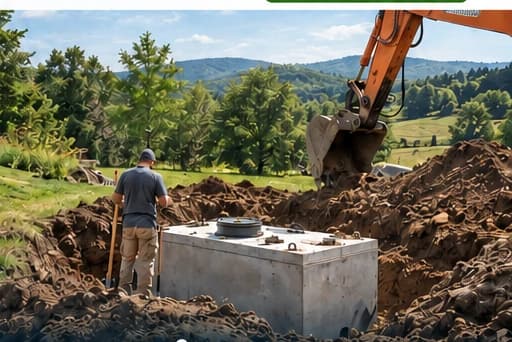
A new septic system and a replacement system can look similar once the excavator is on the lot. They do not start the same way.
In Esperance, installation still waits on site evaluation, a design, and the required approvals. For replacement work, the failed component must also be identified before the new system is designed.
Soil conditions, available space, slope, groundwater, and the intended wastewater flow are evaluated for the individual property. Those findings decide which layouts can be approved.
Esperance is not among the Schoharie County towns currently identified in Catskill Watershed Corporation septic program materials. An Esperance address is not CWC coverage. If a failing system is being replaced, the state fund may apply if the property meets the priority-waterbody and other current eligibility requirements. The town name does not place a parcel in any one of those listed areas.
A difficult-looking lot is a reason to check soil, space, and slope. An engineered or alternative design comes up only when those conditions keep a conventional layout from meeting the requirements.
New construction begins with the building’s wastewater flow and a site that does not yet have a working system. Installation is the end of that sequence, not the beginning. Replacement begins with an existing tank, distribution components, and absorption area, at least one of which is no longer doing its job. System replacement is appropriate when more than the tank, or more than the field, has failed. A tank-only or field-only replacement may remain possible until the condition of the rest of the system is known.
A sale, an addition, or a failed inspection can be why the project is happening. None of those events selects the system type. The approved design does.
Assistance programs discussed for Schoharie County are generally aimed at qualifying replacement of a failing system. A first-time installation for new construction is a different funding question. Check current rules before assuming help is available.
Major septic projects in Schoharie County commonly follow this order. Exact review steps depend on the project.
New building, replacement after failure, or a response to inspection findings. The starting facts differ.
Soil and site work where required, plus the condition of any existing components.
Plans are commonly prepared by an appropriately licensed design professional.
County review is typically required before construction. Additional watershed review applies only where the property is subject to those requirements.
The approved layout, not a field change, is what gets built. Inspection before cover applies where the approval requires it.
For a failing system, check septic replacement funding and, where priority-waterbody geography may apply, the New York State Septic System Replacement Fund. Official materials list several Schoharie County priority-waterbody areas. They are not assigned to Esperance parcels by the town name.
Qualifying properties in an eligible area may want to investigate the state program through official EFC materials.
How the New York State replacement fund and the Catskill Watershed program differ.
Septic replacement fundingRead it when the property may relate to a designated priority waterbody.
NYS Septic System Replacement FundOfficial program resource
Open the Official NYS EFC Septic Replacement Page →Eligibility is determined by the program administrator under current program rules.
Schoharie, Carlisle, and Cobleskill.
No. Esperance is not among the Schoharie County towns currently identified in CWC septic program materials.
Major septic work in Schoharie County commonly involves plans prepared by an appropriately licensed design professional, then the required review. Exact requirements depend on the project.
No. Soil, available area, slope, groundwater, and design constraints are evaluated for that property. That evaluation decides whether a conventional layout can meet the requirements.
If the tank has failed but the absorption area is still functioning, replacing the tank may be all that is required. That still has to be confirmed on the property. A failed field is not fixed by a new tank.
The system type follows the property and what, if anything, has already failed.