
Septic replacement funding
The published programs for Schoharie County. A town name is not an approval.
Septic replacement funding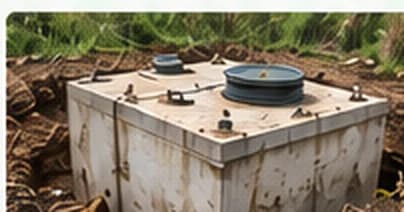
Seward homeowners often reach a fork before any major work is priced: the tank, the absorption area, or both.
A verified tank failure with a field that still accepts wastewater can be tank replacement. A failed field, or several failed parts, is a larger system project.
Tank findings include cracks, leaks, deteriorated baffles, a damaged inlet or outlet, and a vessel that can no longer hold or pass wastewater safely. Field findings include persistent saturation, outdoor odor, or effluent at the surface over the absorption area. The lists overlap in the house: slow drains and backups appear in both.
Seward is not currently identified as a CWC Schoharie County program town. The state fund may apply if the property meets the priority-waterbody and other current eligibility requirements. No specific listed waterbody is assigned to Seward parcels here. Check the official EFC materials for the current list and criteria.
If evaluation supports a tank-only scope, see septic tank replacement. If the field has failed or several components are compromised, plan around system replacement.
Replacing the tank and leaving a failed field in the ground produces a new tank that still cannot get rid of effluent. Replacing the field and leaving a collapsed tank produces the opposite mistake. Before either component is replaced, confirm whether the failure is in the tank, the absorption area, or both.
Distribution components sit between them. A broken outlet line or distribution box can make a sound tank look full and a sound field look unused. Limited distribution problems may be repairable; failure of a major component may require replacement.
Yard saturation is a reason to evaluate the absorption area. It is not, by itself, a decision to replace the tank. Pumping may drop the liquid level and still leave the saturation in place, because pumping does not restore the soil’s ability to accept effluent.
Check septic replacement funding rather than assuming a watershed-town program. The state fund may apply only where the property meets priority-waterbody geography and the other current criteria. Confirm the current requirements with EFC and any local program contact the official materials identify.
The published programs for Schoharie County. A town name is not an approval.
Septic replacement fundingWhere priority-waterbody geography and other criteria may apply.
NYS Septic System Replacement FundOfficial program resource
Open the Official NYS EFC Septic Replacement Page →Eligibility is determined by the program administrator under current program rules.
Cobleskill, Richmondville, and Carlisle.
Yes, when evaluation shows the tank is the failure and the absorption area can still meet the applicable requirements. That is a property-specific finding.
No. Seward is not among the Schoharie County towns currently identified in CWC septic program materials.
Treat it as a possible absorption-area problem and still check the tank and distribution components. Wet ground alone does not prove the field failed, and it does not prove the tank failed.
High use, groundwater or surface water entering a damaged tank, or a field that is not accepting flow can all raise the liquid level again. Pumping records the symptom. It does not name the cause.
Keep those findings separate. A new tank does not fix a failed field, and a new field does not fix a failed tank.